home
|
Kyiv and Kyiv region
Kyiv (Tatarka)
Kyiv (Mamajeva Sloboda)
Kyiv (skansen, Dorohynka)
Kyiv (skansen, Kanora)
Kyiv (skansen, Klesiv)
Kyiv (skansen, Kut-Tovste)
Kyiv (skansen, Kysorychi)
Kyiv (skansen, Zarubyntsi)
Kyiv (skansen, Zelene)
Bziv
Lekhnivka
Lukashi
Lukjanivka
Peremoha
Podillia
Selysche
Khrapachi
Olijnykova Sloboda
Scherbaky
Shkarivka
Sorokotiahy
Sukholisy
Tomylivka
Borodani
Rozkopantsi
Vilkhovets`
Lub`janka
Shybene
Bezuhlivka
Ivankiv
Mala Starytsia
Rohoziv
Hoholiv-1
Hoholiv-2
Ploske
Trebukhiv
Velyka Dymerka
Zavorychi
Borova
Fastiv
Kozhanka
Pivni
Skryhalivka
Vepryk
Fenevychi
Kolentsi
Krasne
Musijky
Prybirsk
Sydorovychi
Buzova
Mykhajlivka-Rubezhivka
Tulyntsi
Vladyslavka
Krenychi
Pidhirci
Vytachiv
Hajshyn
Perejaslav-Khmel`nyts`kyj
(skansen, Andrushi)
Perejaslav-Khmel`nyts`kyj
(skansen, Busheve)
Perejaslav-Khmel`nyts`kyj
(skansen, Ostrijky)
Perejaslav-Khmel`nyts`kyj
(skansen, Pyschyky)
Perejaslav-Khmel`nyts`kyj
(skansen, Sukhyj Yar)
Perejaslav-Khmel`nyts`kyj
(skansen, Vjunysche)
Strokova
Vovchkiv
Busheve
Ostriv
Savyntsi
Syniava
Zhytni Hory
Kryvoshyjintsi
Shalijivka
Antonivka
Bohatyrka
Dubivka
Rosishky
Sofipil`
Kozhukhivka
Lypovyj Skytok
Trostynka
Vasyl`kiv
Berezna
Ozhehivka
Zrajky
Sulymivka
Mala Berezanka
|
Фото Артема Свиридова, 2006 р.


|
|
|
|
Ostriv
Ostriv, Rokytne district,
Kyiv region.
Show on map
|
|


Фото Артема Свиридова з уже неіснуючого сайту oko.kiev.ua, 2006 р.

Фото Олени Крушинської, жовтень 2010 р.

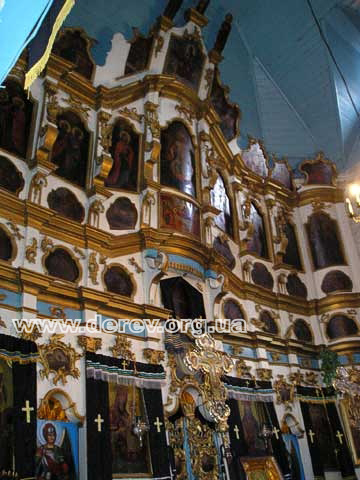
Тут і нижче - ще декілька фотографій Артема Свиридова, 2006 р.

Верхній ярус іконостасу

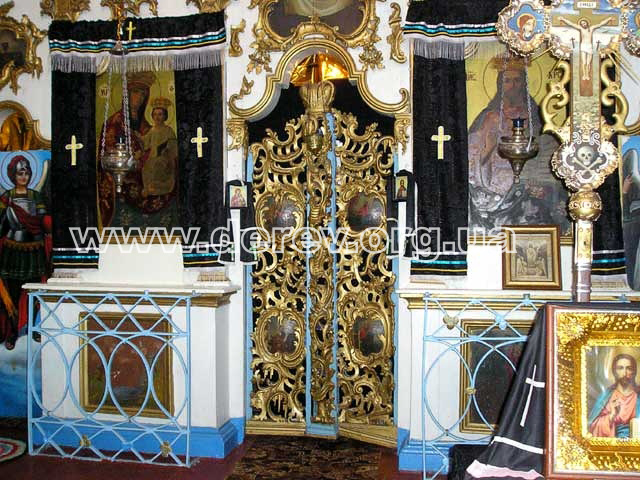
Різьблений рігель
|

Царські врата

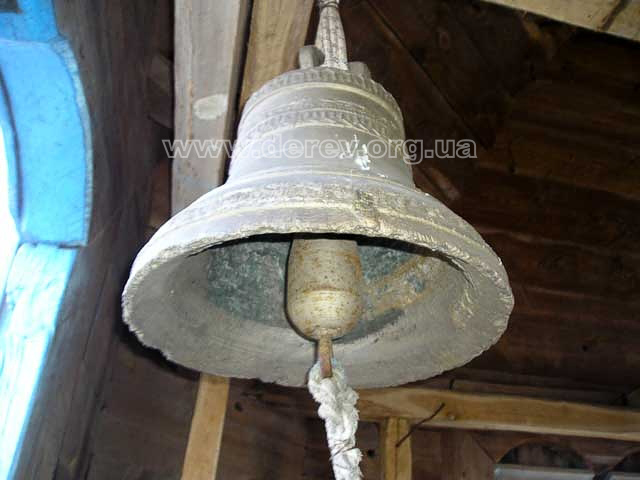
Здається, це той самий дзвін, що на фото нижче (1988 р.) лежить у траві?
|
[Маленков Р., Година О. Дванадцять маршрутів Київщиною. К., Грані-Т, 2008, с.91]:
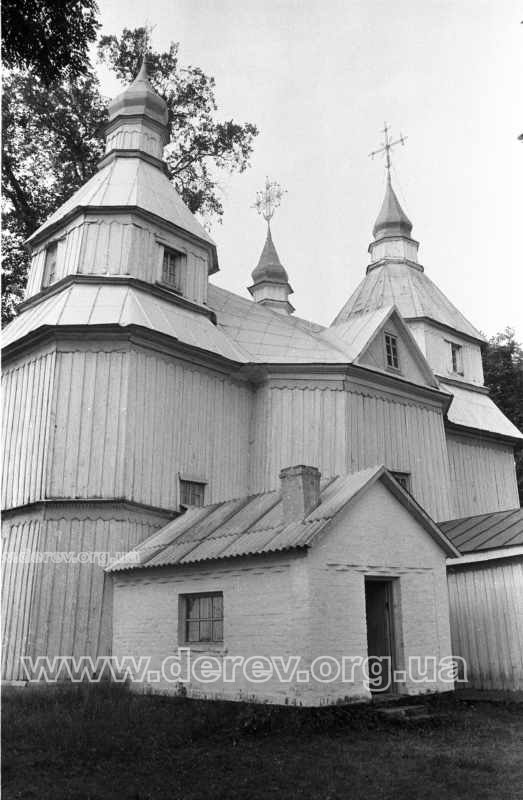
В Острові, неподалік від Росі, збереглася ще одна унікальна дерев’яна церква –
Михайлівська. Храм трьохзрубний, але має лише дві бані. Поряд розташована дзвіниця.
Збудували церкву та дзвіницю у 1740 році. В інтер’єрі збереглися розписи ХІХ століття.
Зараз у церкві тривають ремонтні роботи: міняють крівлю та шалівку.


Фотографії з архіву Миколи Жарких, липень 1988 року
![Вид с юга. [ПГА, т. 1, с. 142]](pga1_365.jpg "Вид с юга. [ПГА, т. 1, с. 142]")
[ПГА, т.1, с.142]:
Расположена на пригорке в центре села. Деревянная на каменном
фундаменте трехсрубная с невысокими боковыми приделами и притвором с
пристройками по бокам апсиды трехглавая. Карниз разделяет наклонные
вертикально ошалеванные стены очень высоких срубов на два яруса. В
интерьере сохранились росписи XIX в. Композиция здания необычна - главы
расположены лишь над восточным и западным срубами. [на думку М.Жарких, центральний верх було розібрано
після якогось руйнування, можливо, під час Другої світової війни]
К юго-западу от церкви находится деревянная двухъярусная
колокольня. Второй ярус ее прорезан отверстиями-голосниками. Здание
является любопытным памятником украинской деревянной архитектуры
Правобережья.
© 2007-2017, Olena Krushynska (derevkhramy@ukr.net)
Всі права застережені відповідно до чинного законодавства України.
Використання будь-яких матеріалів сайту можливе лише за узгодженням з автором.

|
| |
| |
|